IPSC (International Practical Shooting Confederation) is a shooting sport based on practical shooting requiring a combination of accuracy, speed and strategy to achieve a maximum score.
A stage is laid out which includes a range of cardboard targets, steel plates that fall and moving targets. The targets can be engaged randomly or in a specific order set by the stage designer to make it more technically challenging.
You could be asked to shoot while standing but you are more often expected to run around and shoot on the move which is more challenging. Crouching, shooting around corners, lying down or shooting through apertures (windows) is also included.
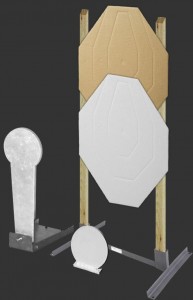 Targets
CARDS
A ‘Card’ is a brown octagonal sheet of corrugated board with 3 zones – A, C and D. The B was the head section of the target that has since been removed to create a less human-like target so subsequently there is no B. Each card requires a minimum of two shots, A will score the highest, then C and then D. The points will vary from one division to another.
STEEL
Thick metal targets spray-painted white or blue. Plates or Poppers require only one hit and must fall over.
NO-SHOOTS
A No-Shoot is an identical octagonal card that it is white rather than brown. Hitting this card will incur heavy penalties. Usually a No-Shoot is positioned over a brown card to reduce the size of the target area forcing the shooter to slow down or risk incurring penalties.
MOVING TARGETS
Moving targets have normal cards attached to a metal frame that swings, turns or runs on a cable. Sometimes they can disappear entirely forcing the shooter to rush.
 SCORE OVER TIME
The time is recorded with an electronic timing device held by the RO (range officer) who stands behind the shooter. Points are accrued and penalties deducted for procedural faults and misses, then the total is divided by the time to achieve a final score called the Hit Factor. The shooter with the highest Hit Factor will win and the runners up are awarded Stage Points according to the percentage they fired compared to the winner.
DIVISIONS
IPSC is divided into categories depending on the type of gun the shooter uses:
 PRODUCTION PRODUCTIONThis division is essentially for ‘off the shelf’ weapons that have very little or no modifications. Regulation with modifications is strict. This division is restricted to double-action or striker fired pistols. There is a 15 round magazine capacity limit. |
| PRODUCTION OPTICS This is the exact same as production but with the addition of a red dot sight. |
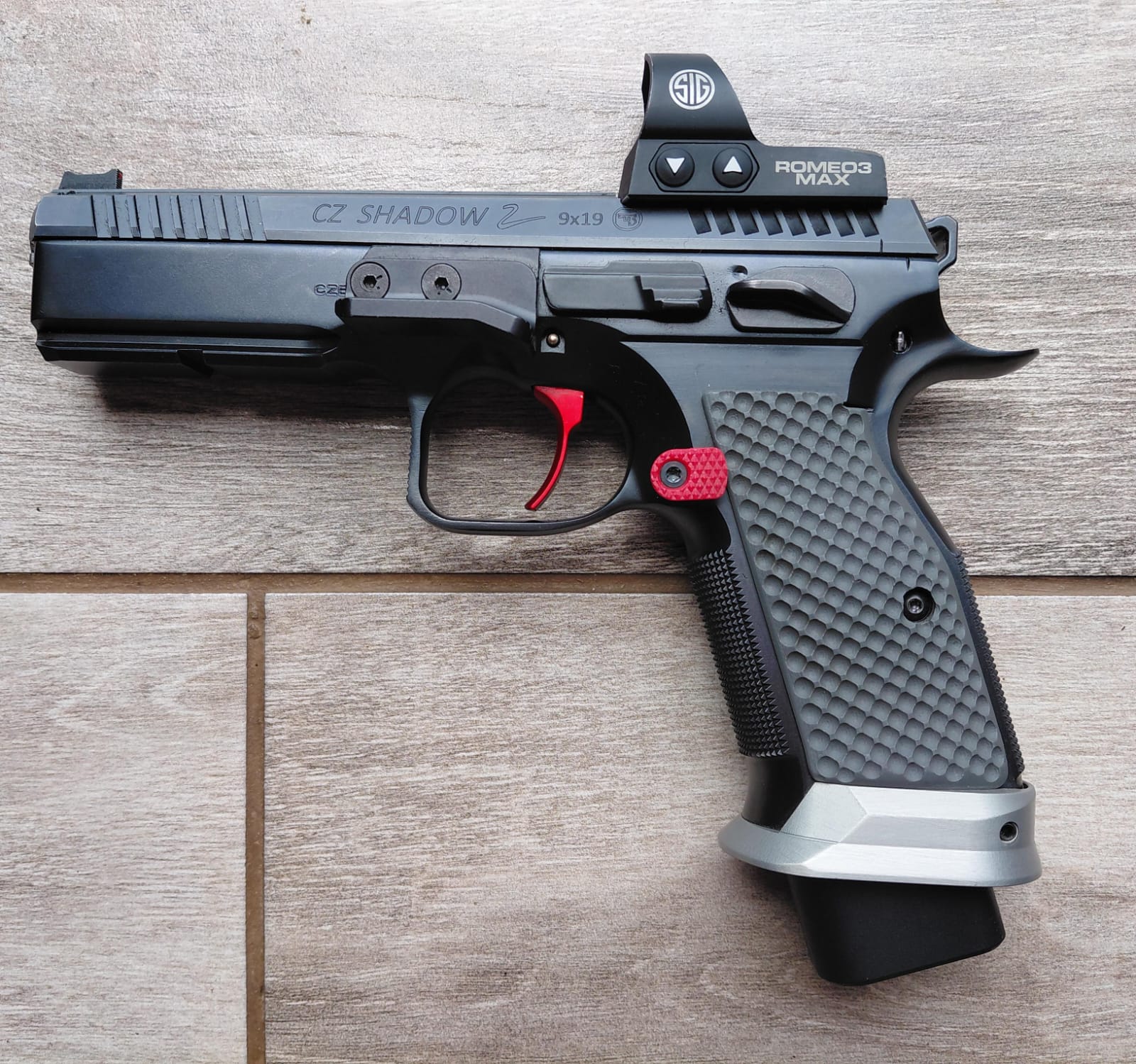 OPTICS OPTICSThis division allows more modifications to the gun. This is a 9mm minor division with mods such as thumb rests, mag wells, single action triggers and a longer magazine as well as a slide mounted optic. There is no round limit but the magazine length is limited to 141.25mm |
 STANDARD STANDARDLimited to .40/.45 caliber for Major or 9mm for Minor. These guns can have magwells and single action triggers but they may not have compensators or red dot sights. There is no round limit but the pistol must physically fit into the “IPSC box” that limits overall size. |
 OPEN OPENThese guns have unlimited modifications. They have compensators, red dot sights, and high-capacity magazines. Typically chambered in .38 Super or 9mm Parabellum, there is no round limit but the magazine length is limited to 170mm |
 CLASSIC CLASSICLimited to guns following the classic 1911 format. Features such as extended dust covers and light rails are not permitted. Restrictions are placed on the size of magazine wells allowed, as well as physical dimension as measured using the “IPSC box”. Other modifications, such as slide lightening and thumb rests are prohibited. |
 PISTOL CALIBRE CARBINE PISTOL CALIBRE CARBINEA PCC rifle is a rifle or carbine chambered in 9mm. You may choose between optics and irons division. Handgun conversion kits are also allowed in this division. There is no minimum barrel length but there is a 32 round bullet limit. |
 RIFLE RIFLEIPSC Rifle division ranges from 2m to 300m targets, there are different sub-divisions of this category including open which allows optics and bipods, standard which is iron sights with no bipods, manual. Calibres start from .223. There is no round limit. |
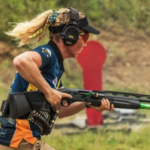 SHOTGUN SHOTGUNIPSC Shotgun has different sub-divisions for manually operated, semi auto with red dots, semi auto without red dots, and ar12 format magazine fed shotguns. The targets are a bit different and the scoring is slightly different from the other divisions. You will shot a variety of loads depending on the stage briefing. Round limits vary b y division. |
All Divisions shoot the same stages, on the same days and in mixed order. However, when calculating match standings, shooters are only compared to other shooters in their division.
EQUIPMENT
To dabble in IPSC as a novice you do not need fancy gear provided you have an external holster on a rigid belt, a few spare magazines, closed non-slip shoes, ear protection and safety glasses.
If you would like to pursue the sport and start competing at club and league shoots you will need to get yourself some better equipment. You do not have to spend a fortune on the most expensive gear (it won’t improve your accuracy) but here is what you will need:
EYE PROTECTION
These are compulsory for everyone as bullet shards can flick back towards the shooter and the spectators. Get yourself a comfortable pair of fitted, anti-fog safety glasses. You can use mountain biking glasses if you have a pair or buy some from a gun store, they are much the same. Make sure the arms are slim or they could hurt your temples or prevent your ear protectors from making a proper seal on your head. Interchangeable lenses are a good idea – they come with clear, yellow and/or orange and shaded lenses.
EAR PROTECTION
Ear plugs alone are not recommended as your ears can still be damaged by the concussion – you need full covers. Look for something light and comfortable that makes a good seal around the sides of your head. Cheap, hardware store ear covers work just fine. More expensive ear covers are electronic which allow you to hear normal sounds and talking but shut out the gun fire.
 BELT
BELT
Any rigid belt will do, but IPSC belts are advised. They have a soft velcro inner belt which threads through your belt loops, and a very rigid velcro outer which the gun holster and the mag holsters attach to. The belts will be a bit different for the rifles, shotgun belts are very different.
HOLSTER
Holsters vary widely in cost and design. A beginner may feel more comfortable with a closed plastic holster but advanced shooters prefer the speed holsters which the gun clips into the front.. The difference in draw speed between the two types is marginal at best. Soft nylon or leather holsters are not recommended. Long guns are stored in bags.
MAG POUCHES
You will need about 3 or 4 magazine holsters, generally they are specific to the make and model of the gun.
MAGAZINES
You will need at least 3 spare magazines for your gun, 4 in total.
 SHIRT
SHIRT
Golf shirts work well for this sport. You need something light-weight with a collar that is well fitted – baggy shirts will get in the way. The shirt must be tucked.
PANTS
Pants must be well fitted and non-stretch with strong belt loops. If your pants are loose or stretchy you will struggle drawing the gun out the holster. Long or short pants can be worn depending on the climate. Dark colors are strongly advised.
SHOES
The most important item of clothing is a pair of comfortable, non-slip shoes. Trail running shoes are ideal. Use non-slip laces or double tie them so they can’t come undone.
SUN PROTECTION
Caps are always recommended as well as sunblock.